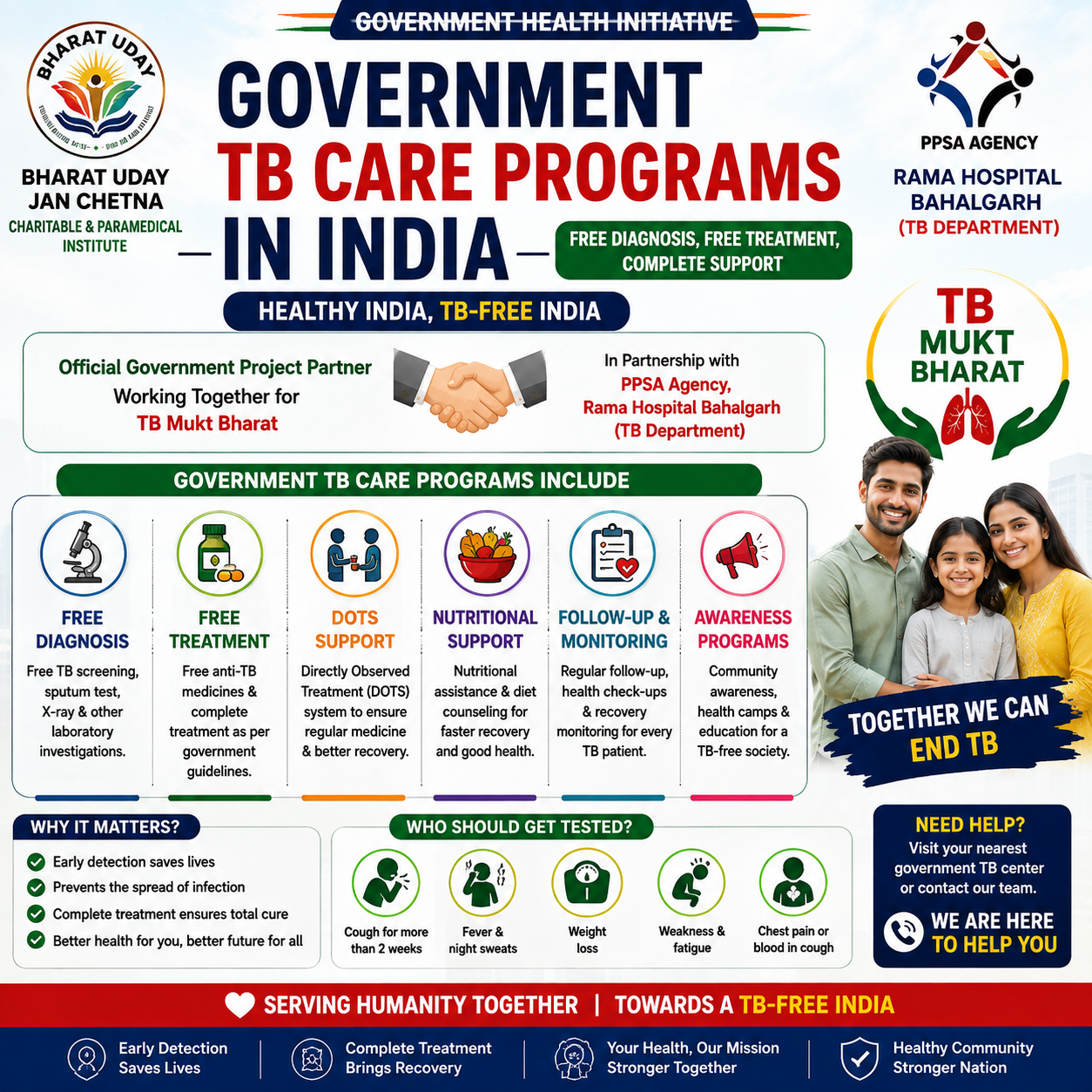
Tuberculosis (TB) is a curable disease, but many people delay getting tested because they ignore the symptoms or lack awareness. Early detection not only improves recovery but also prevents the infection from spreading to others.
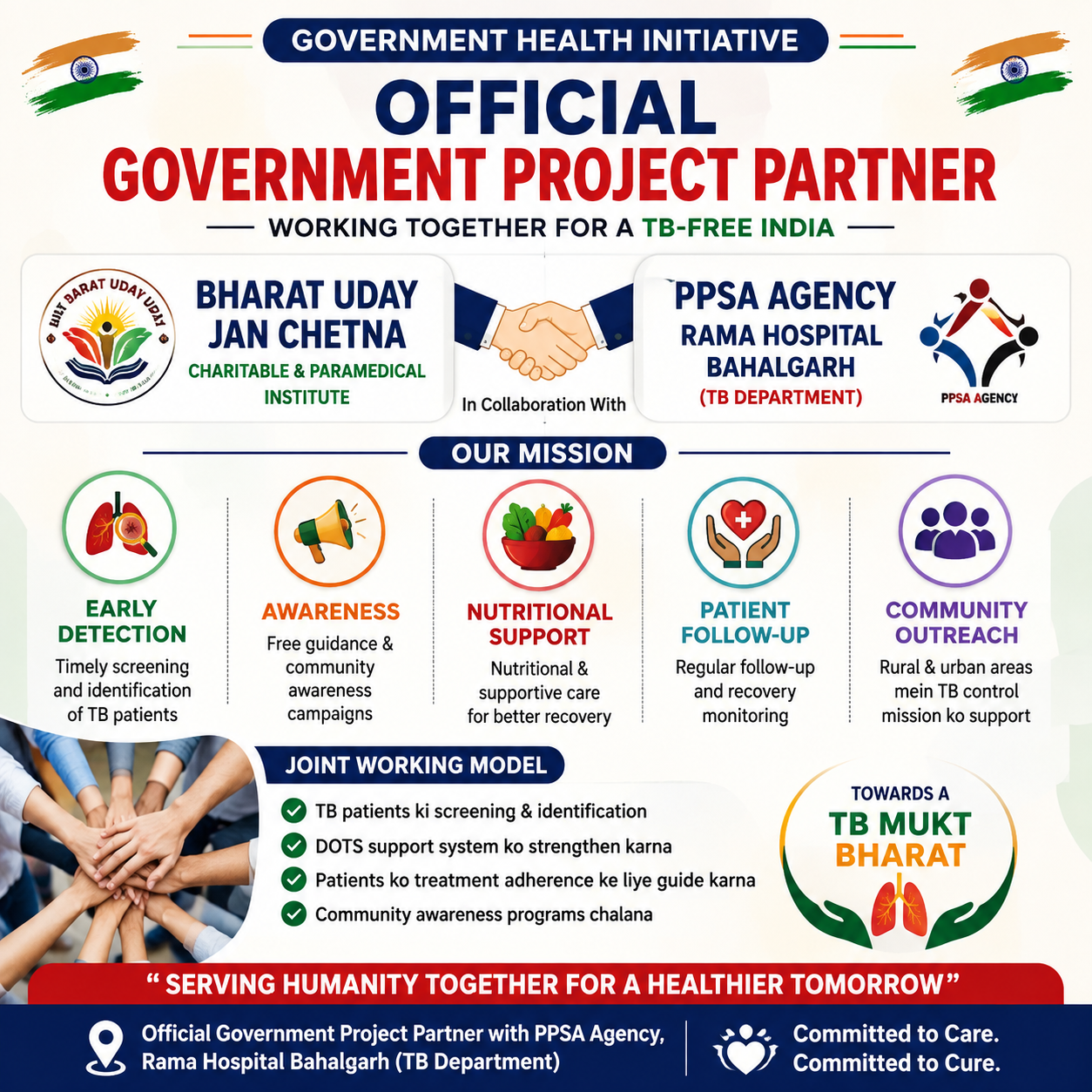
Bharat Uday Jan Chetna Charitable & Paramedical Institute, in partnership with PPSA Agency, Rama Hospital Bahalgarh (TB Department), is actively working to promote early diagnosis, patient support, and community awareness as part of the Government’s TB Mukt Bharat initiative.
What is Early TB Detection?
Early TB detection means identifying the disease before it becomes severe or spreads to other people.
A person should get tested immediately if they experience:
- Cough lasting more than two weeks
- Fever
- Night sweats
- Weight loss
- Chest pain
- Fatigue or weakness
Timely diagnosis leads to quicker treatment and better health outcomes.
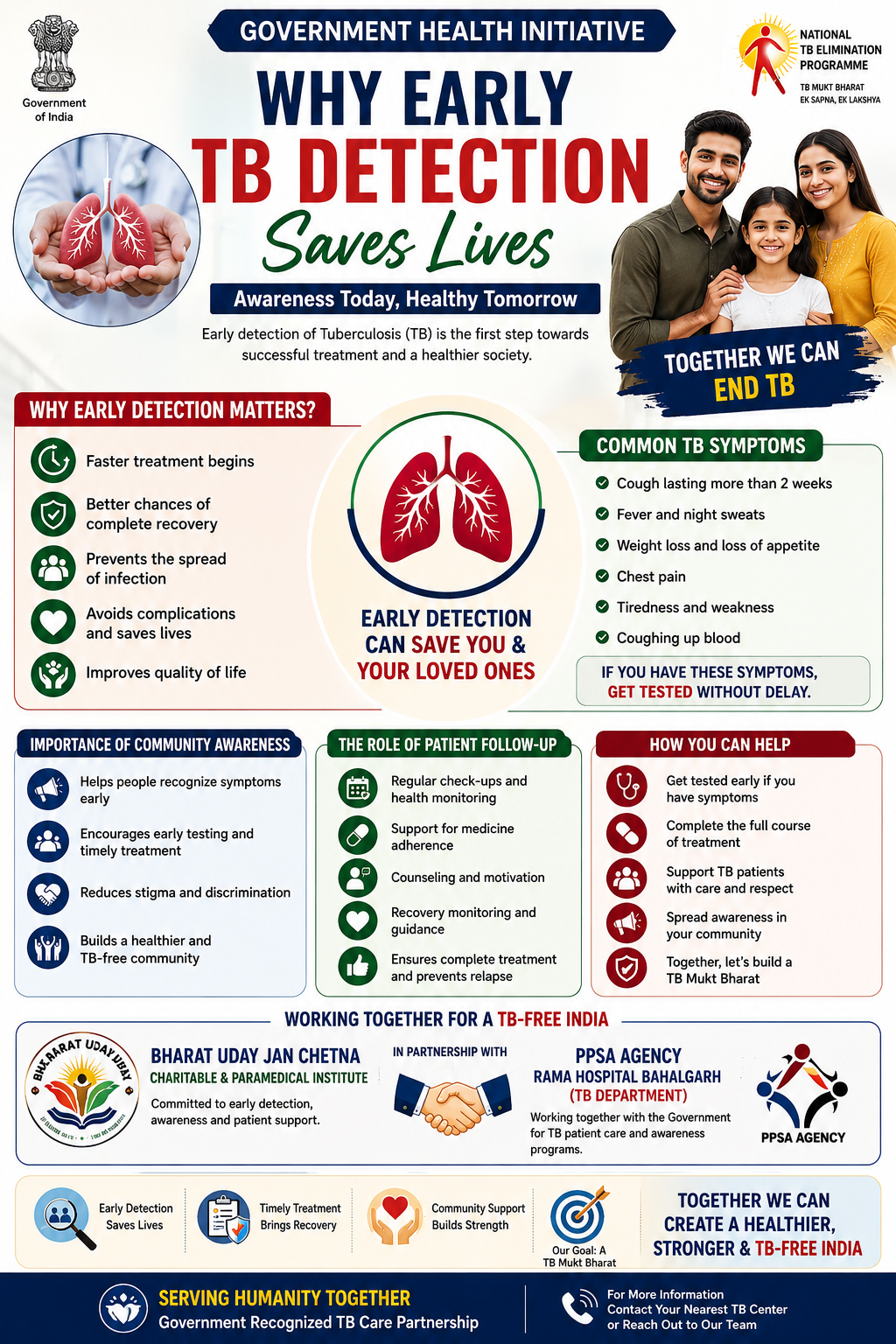
Why Early Detection Matters
Detecting TB in its early stages offers several benefits:
- Faster treatment begins
- Better chances of complete recovery
- Lower risk of complications
- Reduced spread of infection
- Improved quality of life
The sooner treatment starts, the easier it is to control the disease.
Common Reasons People Delay Testing
Many TB cases are diagnosed late because people:
- Ignore persistent symptoms
- Believe the cough is due to weather changes
- Fear social stigma
- Avoid visiting healthcare centers
- Lack awareness about free government services
Creating awareness helps people seek medical care without delay.
Importance of Community Awareness
Community awareness is one of the strongest tools in the fight against TB.
Awareness programs help people:
- Understand TB symptoms
- Learn how TB spreads
- Know that TB is curable
- Reduce myths and stigma
- Encourage early testing
- Support patients during treatment
When communities are informed, more people come forward for testing and treatment.
The Role of Patient Follow-up
TB treatment takes time and requires regular monitoring. Patient follow-up ensures that individuals continue their medicines as prescribed and complete the full treatment course.
Follow-up includes:
- Regular health check-ups
- Medicine adherence support
- Counseling and motivation
- Recovery monitoring
- Guidance from healthcare workers
- Addressing treatment-related concerns
Proper follow-up reduces the risk of treatment interruption and improves recovery.
Community Participation in TB Control
Everyone can contribute to the fight against TB.
Community members can:
- Encourage people with symptoms to get tested
- Share accurate information about TB
- Participate in awareness campaigns
- Support patients emotionally
- Help reduce discrimination against TB patients
Together, communities can create a healthier environment and reduce the spread of tuberculosis.
Our Contribution to the TB Mukt Bharat Mission
Bharat Uday Jan Chetna Charitable & Paramedical Institute proudly works as an Official Government Project Partner with PPSA Agency, Rama Hospital Bahalgarh (TB Department).
Our activities include:
- Early TB patient identification
- Community screening programs
- Free health guidance
- Awareness campaigns
- DOTS treatment support
- Patient counseling
- Recovery monitoring
- Rural and urban outreach initiatives
Our goal is to ensure that every patient receives timely care and completes treatment successfully.
How You Can Help
You can support the TB Mukt Bharat mission by:
- Getting tested if symptoms persist
- Encouraging family and friends to seek medical advice
- Completing the full TB treatment if diagnosed
- Participating in awareness programs
- Sharing correct information about TB
- Supporting patients without discrimination
Every small action helps build a healthier society.
Frequently Asked Questions
Can early detection cure TB?
Early detection itself does not cure TB, but it allows treatment to begin quickly, greatly increasing the chances of a full recovery.
Why is patient follow-up important?
Regular follow-up helps patients stay on treatment, monitor progress, and avoid complications or treatment failure.
Is TB treatment free?
Yes. Government healthcare facilities provide free diagnosis and treatment for TB patients.
Can TB be prevented?
Yes. Early diagnosis, proper treatment, good hygiene, and community awareness help prevent the spread of TB.