Tuberculosis (TB) remains one of the most common infectious diseases in India. Although TB is preventable and curable, many people delay getting tested because they are unaware of its symptoms or fear social stigma. Early diagnosis and proper treatment can save lives, prevent complications, and stop the spread of the disease.
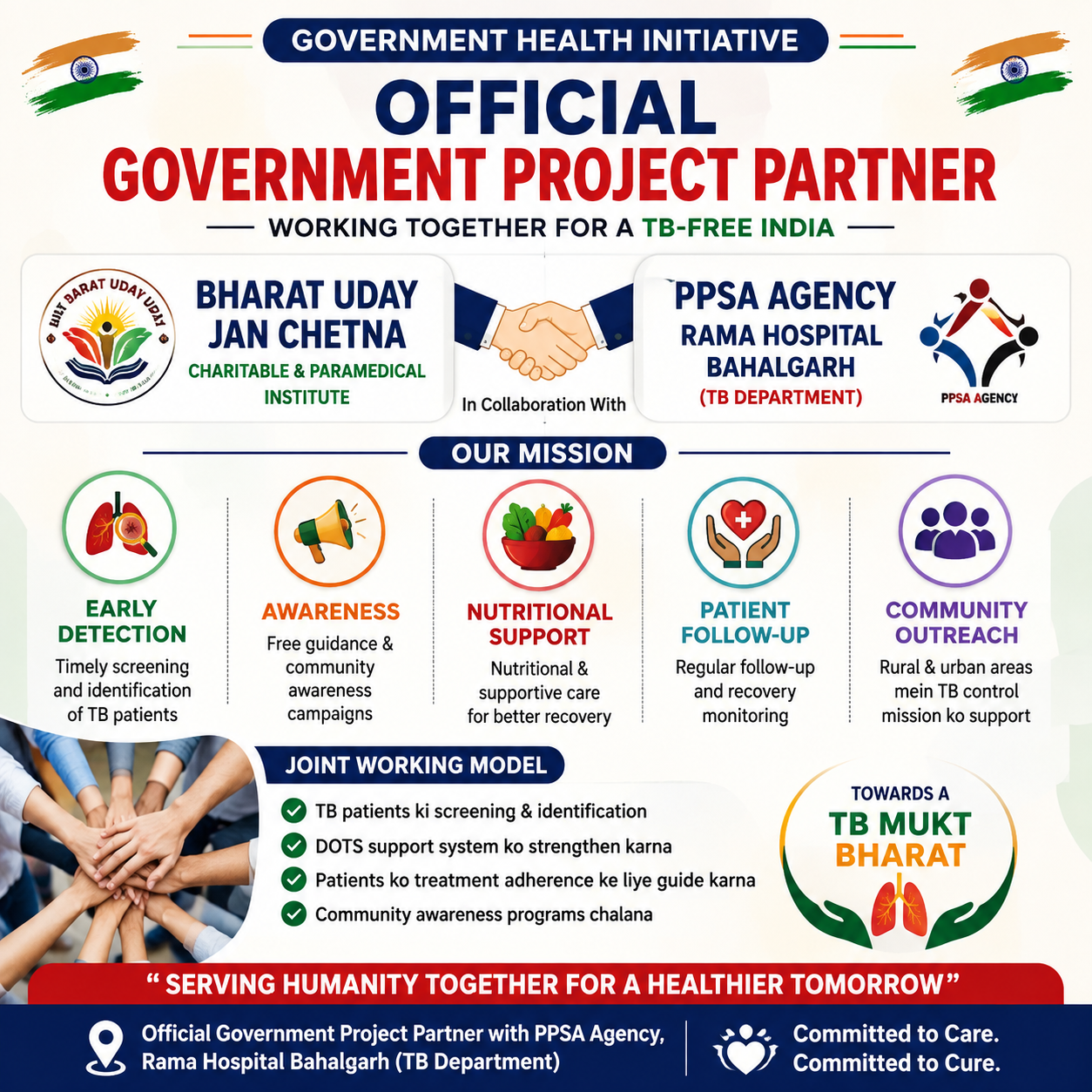
At Bharat Uday Jan Chetna Charitable & Paramedical Institute, we are proud to work as an Official Government Project Partner with PPSA Agency, Rama Hospital Bahalgarh (TB Department). Through this partnership, we support government health initiatives by promoting TB awareness, early detection, patient guidance, and community healthcare services.
Our shared goal is to contribute to the vision of a TB Mukt Bharat (TB-Free India) by ensuring that quality healthcare reaches every individual, especially in rural and underserved communities.
What is Tuberculosis (TB)?
Tuberculosis (TB) is a contagious bacterial infection caused by Mycobacterium tuberculosis. It mainly affects the lungs but can also impact other parts of the body such as:
- Brain
- Kidneys
- Spine
- Bones
- Lymph nodes
TB spreads through the air when an infected person coughs, sneezes, laughs, or speaks. A person nearby may inhale these bacteria and become infected.
The good news is that TB is completely treatable when diagnosed early and treated correctly.
Types of Tuberculosis
1. Pulmonary Tuberculosis
This is the most common form of TB and affects the lungs. It is also the most infectious type because it spreads through the air.
2. Extrapulmonary Tuberculosis
This type affects organs other than the lungs, including the brain, bones, kidneys, or lymph nodes. It usually requires specialized medical diagnosis and treatment.
Common Symptoms of TB
Recognizing the symptoms early can help prevent serious health complications.
Common symptoms include:
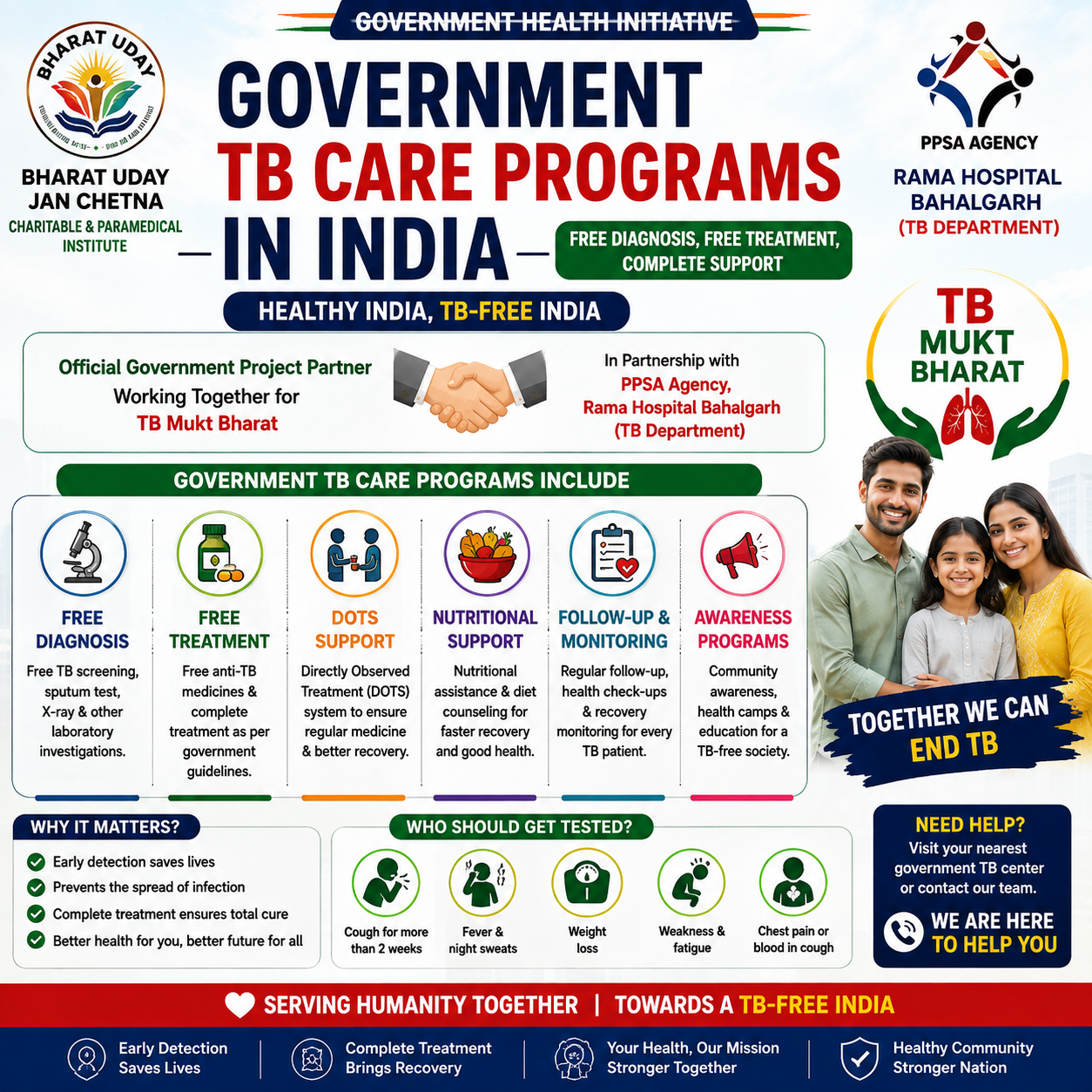
- Persistent cough lasting more than two weeks
- Chest pain
- Coughing up blood
- Fever
- Night sweats
- Sudden weight loss
- Loss of appetite
- Constant tiredness and weakness
If you or a family member experiences these symptoms, it is important to visit a healthcare center for a TB test without delay.
How Does TB Spread?
TB bacteria spread through tiny droplets released into the air when an infected person:
- Coughs
- Sneezes
- Speaks
- Sings
It does not spread by:
- Sharing food
- Shaking hands
- Touching objects
- Using the same utensils
Good ventilation, wearing masks when necessary, and early treatment significantly reduce the risk of transmission.
Who Is More at Risk?
Anyone can develop TB, but certain groups are at higher risk, including:
- People with weak immune systems
- Elderly individuals
- Children
- People living in overcrowded areas
- Malnourished individuals
- Diabetic patients
- Smokers
- People with chronic illnesses
Regular health check-ups and early screening can help identify TB before it becomes severe.
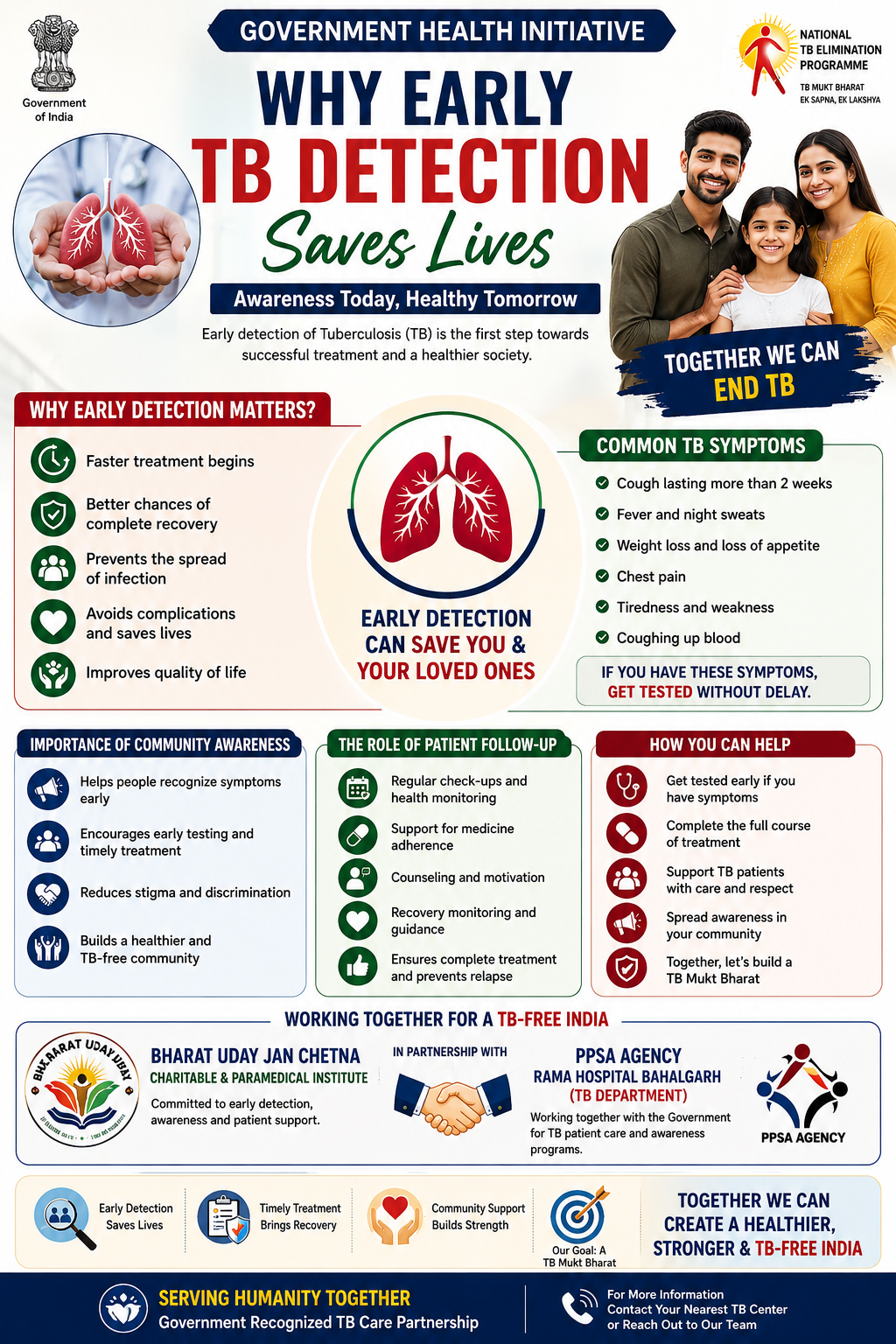
Why Early Detection is Important
Early diagnosis benefits both the patient and the community.
When TB is detected early:
- Treatment starts sooner
- Recovery is faster
- Risk of spreading infection decreases
- Serious complications are prevented
- Chances of complete cure improve significantly
Ignoring symptoms can lead to severe illness and increase the spread of infection to family members and others.
TB Treatment in India
TB treatment in India is available free of cost under government healthcare programs.
Treatment generally includes:
- Proper medical diagnosis
- Prescribed anti-TB medicines
- Regular health monitoring
- Follow-up visits
- Nutritional support where applicable
- Counseling for treatment adherence
It is essential to complete the full course of medication, even if symptoms improve earlier. Stopping treatment midway can lead to drug-resistant TB, which is much harder to treat.
Government Support for TB Patients
The Government of India has introduced several initiatives to eliminate TB and ensure that patients receive timely care.
These initiatives include:
- Free TB screening and diagnosis
- Free medicines
- DOTS (Directly Observed Treatment, Short-course) support
- Nutritional assistance for eligible patients
- Community awareness campaigns
- Patient follow-up and recovery monitoring
These services are designed to make TB treatment accessible and effective for everyone.
Our Role in Supporting the TB Mukt Bharat Mission
Bharat Uday Jan Chetna Charitable & Paramedical Institute is honored to collaborate with PPSA Agency, Rama Hospital Bahalgarh (TB Department) as an Official Government Project Partner.
Together, we are committed to strengthening TB control efforts through:
- Early identification of TB patients
- Community-based screening programs
- Free health guidance
- Awareness campaigns in rural and urban areas
- Support for the DOTS treatment system
- Patient counseling and treatment adherence
- Recovery monitoring and follow-up care
- Nutritional and supportive healthcare programs
Our mission is to ensure that every patient receives the support they need throughout their treatment journey.
How You Can Help Prevent TB
Every individual can contribute to reducing the spread of TB.
Here are some simple preventive measures:
- Seek medical advice if you have a cough lasting more than two weeks.
- Complete the full course of TB treatment if diagnosed.
- Maintain good nutrition to strengthen your immune system.
- Keep indoor spaces well ventilated.
- Cover your mouth while coughing or sneezing.
- Encourage family members to get tested if they have symptoms.
- Participate in local TB awareness and screening programs.
Small actions can make a big difference in protecting families and communities.
Frequently Asked Questions (FAQs)
Is TB curable?
Yes. TB is completely curable when diagnosed early and treated according to medical advice.
Is TB treatment free in India?
Yes. Government healthcare programs provide free diagnosis and treatment for TB patients through authorized healthcare centers.
Can TB spread by sharing food?
No. TB spreads through the air, not through food, water, or sharing utensils.
How long does TB treatment take?
The duration depends on the type and severity of TB. Patients should always follow the treatment plan prescribed by healthcare professionals.
What should I do if I have TB symptoms?
Visit your nearest healthcare facility immediately for testing. Early diagnosis can prevent complications and protect others from infection.
Conclusion
What is Tuberculosis (TB)?
Tuberculosis (TB) is a contagious bacterial infection caused by Mycobacterium tuberculosis. It mainly affects the lungs but can also impact other parts of the body such as:
Brain
Kidneys
Spine
Bones
Lymph nodes
TB spreads through the air when an infected person coughs, sneezes, laughs, or speaks. A person nearby may inhale these bacteria and become infected.
The good news is that TB is completely treatable when diagnosed early and treated correctly.
Types of Tuberculosis
- Pulmonary Tuberculosis
This is the most common form of TB and affects the lungs. It is also the most infectious type because it spreads through the air.
- Extrapulmonary Tuberculosis
This type affects organs other than the lungs, including the brain, bones, kidneys, or lymph nodes. It usually requires specialized medical diagnosis and treatment.
Common Symptoms of TB
Recognizing the symptoms early can help prevent serious health complications.
Common symptoms include:
Persistent cough lasting more than two weeks
Chest pain
Coughing up blood
Fever
Night sweats
Sudden weight loss
Loss of appetite
Constant tiredness and weakness
If you or a family member experiences these symptoms, it is important to visit a healthcare center for a TB test without delay.
How Does TB Spread?
TB bacteria spread through tiny droplets released into the air when an infected person:
Coughs
Sneezes
Speaks
Sings
It does not spread by:
Sharing food
Shaking hands
Touching objects
Using the same utensils
Good ventilation, wearing masks when necessary, and early treatment significantly reduce the risk of transmission.
Who Is More at Risk?
Anyone can develop TB, but certain groups are at higher risk, including:
People with weak immune systems
Elderly individuals
Children
People living in overcrowded areas
Malnourished individuals
Diabetic patients
Smokers
People with chronic illnesses
Regular health check-ups and early screening can help identify TB before it becomes severe.
Why Early Detection is Important
Early diagnosis benefits both the patient and the community.
When TB is detected early:
Treatment starts sooner
Recovery is faster
Risk of spreading infection decreases
Serious complications are prevented
Chances of complete cure improve significantly
Ignoring symptoms can lead to severe illness and increase the spread of infection to family members and others.
TB Treatment in India
TB treatment in India is available free of cost under government healthcare programs.
Treatment generally includes:
Proper medical diagnosis
Prescribed anti-TB medicines
Regular health monitoring
Follow-up visits
Nutritional support where applicable
Counseling for treatment adherence
It is essential to complete the full course of medication, even if symptoms improve earlier. Stopping treatment midway can lead to drug-resistant TB, which is much harder to treat.
Government Support for TB Patients
The Government of India has introduced several initiatives to eliminate TB and ensure that patients receive timely care.
These initiatives include:
Free TB screening and diagnosis
Free medicines
DOTS (Directly Observed Treatment, Short-course) support
Nutritional assistance for eligible patients
Community awareness campaigns
Patient follow-up and recovery monitoring
These services are designed to make TB treatment accessible and effective for everyone.
Our Role in Supporting the TB Mukt Bharat Mission
Bharat Uday Jan Chetna Charitable & Paramedical Institute is honored to collaborate with PPSA Agency, Rama Hospital Bahalgarh (TB Department) as an Official Government Project Partner.
Together, we are committed to strengthening TB control efforts through:
Early identification of TB patients
Community-based screening programs
Free health guidance
Awareness campaigns in rural and urban areas
Support for the DOTS treatment system
Patient counseling and treatment adherence
Recovery monitoring and follow-up care
Nutritional and supportive healthcare programs
Our mission is to ensure that every patient receives the support they need throughout their treatment journey.
How You Can Help Prevent TB
Every individual can contribute to reducing the spread of TB.
Here are some simple preventive measures:
Seek medical advice if you have a cough lasting more than two weeks.
Complete the full course of TB treatment if diagnosed.
Maintain good nutrition to strengthen your immune system.
Keep indoor spaces well ventilated.
Cover your mouth while coughing or sneezing.
Encourage family members to get tested if they have symptoms.
Participate in local TB awareness and screening programs.
Small actions can make a big difference in protecting families and communities.
Frequently Asked Questions (FAQs)
Is TB curable?
Yes. TB is completely curable when diagnosed early and treated according to medical advice.
Is TB treatment free in India?
Yes. Government healthcare programs provide free diagnosis and treatment for TB patients through authorized healthcare centers.
Can TB spread by sharing food?
No. TB spreads through the air, not through food, water, or sharing utensils.
How long does TB treatment take?
The duration depends on the type and severity of TB. Patients should always follow the treatment plan prescribed by healthcare professionals.
What should I do if I have TB symptoms?
Visit your nearest healthcare facility immediately for testing. Early diagnosis can prevent complications and protect others from infection.